
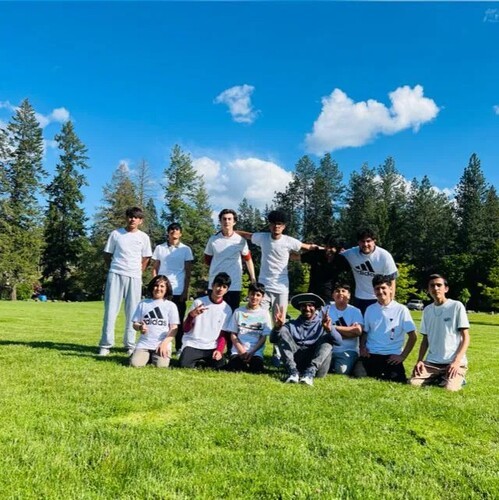
Dr. Manoj Thirupal, Founder & Head Coach
The bat his father made
Dr. Manoj Thirupal was born and raised in the slums of Chennai, India.
As a poor Dalit kid, he couldn't afford a store-bought bat like the other kids. But he was already great at cricket.
His father made him his first cricket bat. Manoj went on to captain his school team. Locally, he was known as “Chennai Express” and “Arrow.”
Teams recruited him specifically to help them win, even as his father’s poverty was plainly visible: no shoes on his feet, worn shorts, the kind of background elite clubs never accepted. These clubs did accept Manoj — but only his cricket skills, not his story, not the rest of who he was.
At sixteen Manoj was fast enough to be called to Premier League pace-bowling trials at Chepauk, alongside roughly 1,500 other hopefuls. The trials clocked his average at 147.2 km/h (about 91.5 mph), with his fastest delivery at 152.6 km/h. He finished top of the list.
He sat for a media interview as the presumed selection, with everyone around him certain his name would be announced. It never was.
Money, caste, and connections opened doors for other candidates, but blocked them for him.
Dr. Manoj Thirupal was born and raised in the slums of Chennai, India.
As a poor Dalit kid, he couldn't afford a store-bought bat like the other kids. But he was already great at cricket.
His father made him his first cricket bat. Manoj went on to captain his school team. Locally, he was known as “Chennai Express” and “Arrow.”
Teams recruited him specifically to help them win, even as his father’s poverty was plainly visible: no shoes on his feet, worn shorts, the kind of background elite clubs never accepted. These clubs did accept Manoj — but only his cricket skills, not his story, not the rest of who he was.
At sixteen Manoj was fast enough to be called to Premier League pace-bowling trials at Chepauk, alongside roughly 1,500 other hopefuls. The trials clocked his average at 147.2 km/h (about 91.5 mph), with his fastest delivery at 152.6 km/h. He finished top of the list.
He sat for a media interview as the presumed selection, with everyone around him certain his name would be announced. It never was.
Money, caste, and connections opened doors for other candidates, but blocked them for him.
He didn’t stop playing
Manoj captained both the undergraduate and graduate teams at Loyola College in Chennai, and played for major companies and clubs across South India. When he came to the US to study, he worked part-time jobs until he had saved enough for his first real cricket bat. He was twenty-eight when he finally purchased the bat his father couldn't afford to buy him.
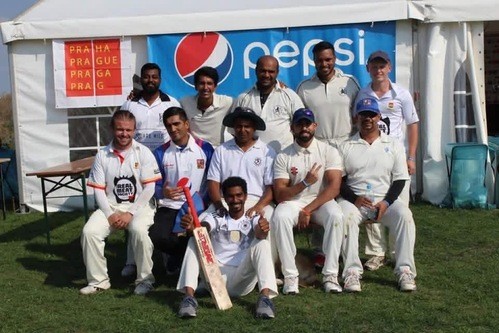
He was invited to join the Czech national squad as a guest player at the International Pepsi Cup Tournament, a T20 invitational. They asked him to stay on for two years and play for the Czech national team permanently. He turned it down and came back to his studies in Spokane. The following year, Mad Dogs Cricket Club of Connecticut, who had faced him as opponents at the Pepsi Cup, invited him to represent the USA at the same tournament instead.
Manoj captained both the undergraduate and graduate teams at Loyola College in Chennai, and played for major companies and clubs across South India. When he came to the US to study, he worked part-time jobs until he had saved enough for his first real cricket bat. He was twenty-eight when he finally purchased the bat his father couldn't afford to buy him.
He was invited to join the Czech national squad as a guest player at the International Pepsi Cup Tournament, a T20 invitational. They asked him to stay on for two years and play for the Czech national team permanently. He turned it down and came back to his studies in Spokane. The following year, Mad Dogs Cricket Club of Connecticut, who had faced him as opponents at the Pepsi Cup, invited him to represent the USA at the same tournament instead.
Building it differently in Spokane
Manoj has been playing forty-over cricket — the longer format — for the Spokane Spartans since 2016.
He founded the Gonzaga Cricket Club, where college students met cricket alongside the baseball they grew up with, and taught Cricket Adventures for the Reardan-Edwall School District, coaching fundamentals from kindergarten through eighth grade. He has taken things back the other way too, borrowing baseball's throwing technique and power hitting into his own game and into how he coaches.
In 2023, neither Spokane nor Pullman had the numbers for a full eleven in the T20 league. Manoj proposed a collaboration, supported from the start by WSU professor Amit Thakar, and founded the Eastside Chargers — both clubs as one side, later renamed the Eastside Thunder Hawks.
The Hawks now draw players from Spokane, Pullman, the Tri-Cities and Idaho, collaborating to represent eastern Washington in the Northwest Cricket League's short format. They have climbed from Division D to Division B in three seasons.
Manoj has been playing forty-over cricket — the longer format — for the Spokane Spartans since 2016.
He founded the Gonzaga Cricket Club, where college students met cricket alongside the baseball they grew up with, and taught Cricket Adventures for the Reardan-Edwall School District, coaching fundamentals from kindergarten through eighth grade. He has taken things back the other way too, borrowing baseball's throwing technique and power hitting into his own game and into how he coaches.
In 2023, neither Spokane nor Pullman had the numbers for a full eleven in the T20 league. Manoj proposed a collaboration, supported from the start by WSU professor Amit Thakar, and founded the Eastside Chargers — both clubs as one side, later renamed the Eastside Thunder Hawks.
The Hawks now draw players from Spokane, Pullman, the Tri-Cities and Idaho, collaborating to represent eastern Washington in the Northwest Cricket League's short format. They have climbed from Division D to Division B in three seasons.
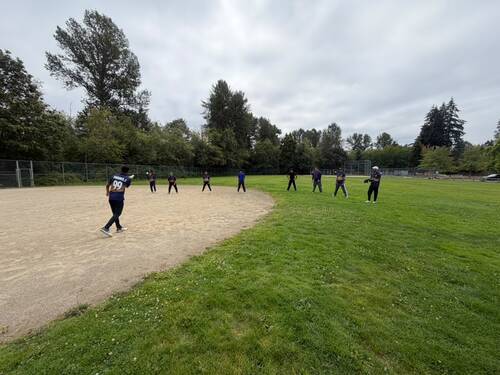
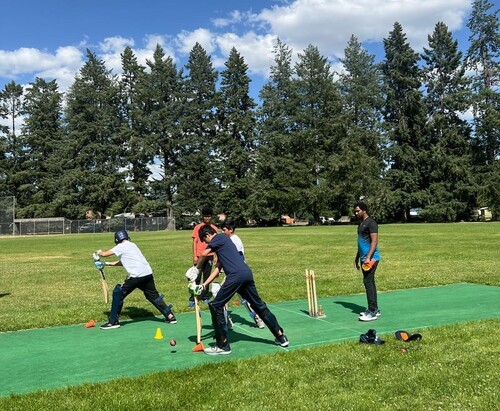
Manoj has coached refugee and immigrant youth as a volunteer since 2022, building a program from what started as informal coaching sessions. As a kid in Chennai, teams recruited Manoj for his fast bowling, but rejected the rest of his story. Here in Spokane, Manoj welcomes his team members' strengths, their challenges, their stories, and all the ways that cricket interweaves through their lives.
Out of that program, four players are in the league — two with the Hawks in Division B, and two with the Spokane Spartans in Division D. A fifth had a place but could not take it, because his work would not release him on Saturdays. The rest are training to debut as their own team, the Spokane Otters, next year. Manoj also hopes to see some of the program's graduates join him in coaching roles with younger students.
Out of that program, four players are in the league — two with the Hawks in Division B, and two with the Spokane Spartans in Division D. A fifth had a place but could not take it, because his work would not release him on Saturdays. The rest are training to debut as their own team, the Spokane Otters, next year. Manoj also hopes to see some of the program's graduates join him in coaching roles with younger students.
Manoj teaches leadership at Gonzaga, where the Jesuit call to go forth and set the world on fire names what he tries to offer these boys.
Sport becomes a form of healing here—a place to learn, to belong with others, and to be defined by more than your usable skills.
Sport becomes a form of healing here—a place to learn, to belong with others, and to be defined by more than your usable skills.